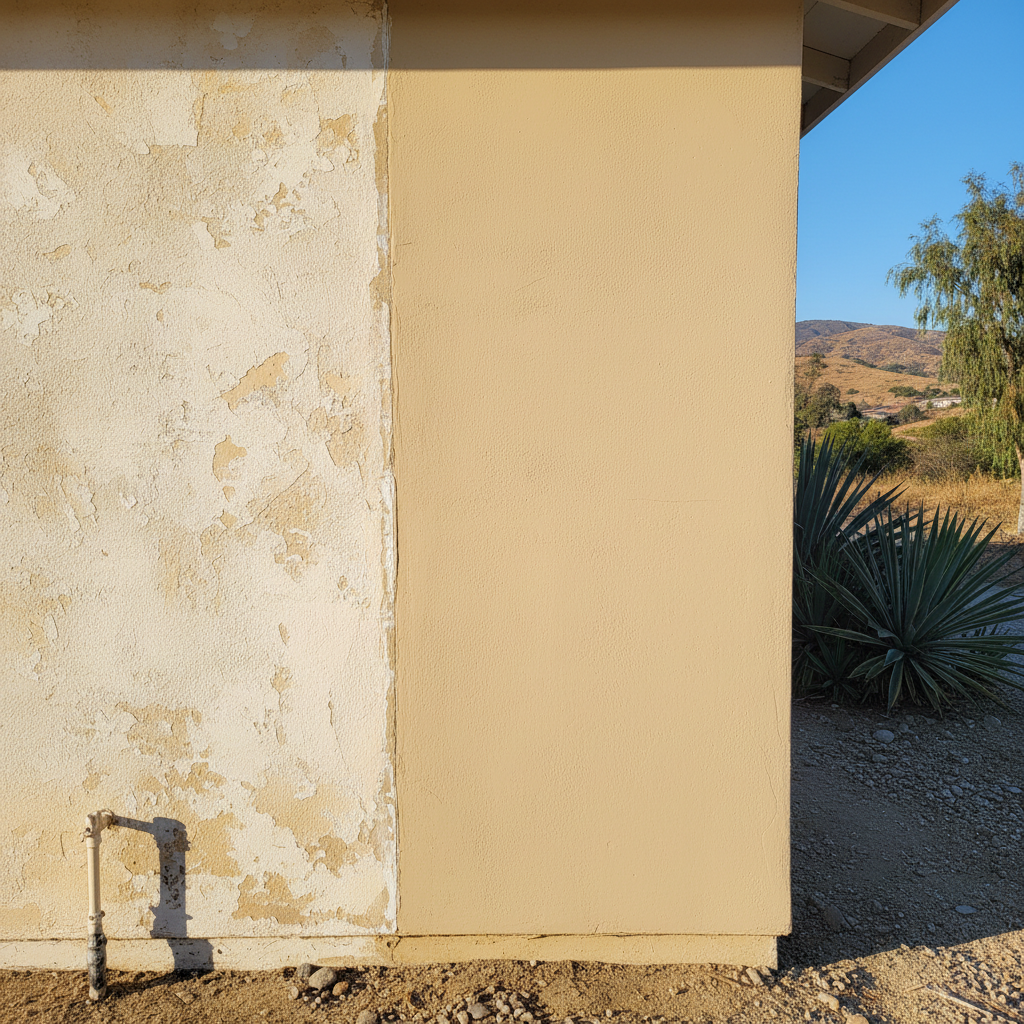
So, you've got some stucco damage. Maybe it's just a crack, or a chip from that rogue baseball your kid hit, or maybe you're seeing some water staining near a window. Your first thought probably goes something like, "How can I fix this without emptying my wallet?" And that's a totally fair question, isn't it? When we talk about stucco repair here in El Cajon, you generally have two main choices: we can patch up just the problem spot, or we can do a full re-dash of the whole wall, or even the entire house. I've been doing this work for years with El Cajon Stucco & Plastering, and I've seen both approaches in action. Each one definitely has its place.
Spot Patching: A Quick Fix or Just a Band-Aid?
Patching is pretty much what it sounds like. We find the damaged section, clear away any loose bits, get the surface ready, and then put on new stucco. Our goal is always to match the existing finish as closely as we can. People often think of this first because, on the surface, it seems like the most straightforward and cheapest way to go.
Cost & Time
No doubt about it, patching costs less up front. You're paying for fewer materials and less labor. For a small crack or a hole about the size of your fist, it's usually a quick job—maybe a day or even less, depending on how big or tricky it is. This works great if your budget is tight or if the problem is really localized.
Durability & Maintenance
A patch, if we do it right, can be pretty tough. Especially if we've already fixed whatever caused the damage, like a water leak. But here's the thing: it's only as good as the stucco around it. If your existing stucco is old, brittle, or has tiny cracks all over, that patch might hold, but new issues could pop up right next to it. You won't need to do much to maintain the patch itself, but you'll still want to keep an eye on the rest of the wall.
Appearance
This is often where patching falls short, especially if your stucco is older. It's incredibly hard to get the color and texture to match perfectly. Even if we use the exact same mix, the new stucco cures differently and often stands out. You'll notice it, particularly on a bright El Cajon afternoon. The older your stucco, the more faded or weathered it is, the harder it becomes to blend a patch in seamlessly. You might just end up with a visible "scar" on your wall, which can really be an eyesore.
Full Re-Dash: A Real Fresh Start
A full re-dash means we apply a new layer of stucco right over your existing, prepped stucco. We're not tearing everything off; instead, we're putting on a new finish coat that covers the entire surface. It's a much more complete solution.
Cost & Time
A re-dash is a bigger investment, let's be honest. It needs more materials, more labor, and it takes longer—usually several days to a week or even more for a whole house, depending on its size. But what you get is a completely new look and a fresh protective layer for your home.
Durability & Maintenance
This is where a re-dash really shines. You're basically giving your home a brand-new skin. If we do it correctly, it offers excellent durability and protection against our local weather, which includes those hot, dry Santa Ana winds and the occasional heavy rains. You'll have consistent protection across the entire surface, and with good care, it will last for decades. Maintenance is similar to new stucco – just some occasional cleaning and checking for any new problems.
Appearance
This is the main reason so many homeowners choose a re-dash. You get a completely uniform, fresh look. No mismatched patches, no faded spots. You can even change the color or texture if you want to give your home a whole new curb appeal. It makes your home look brand new again, which can really boost its value and how good it looks.
My Recommendation for El Cajon Homes
Here's the deal: for a truly minor, isolated problem on relatively new stucco (say, less than 5-7 years old) that hasn't faded much, a patch might be okay. Think a small ding or a hairline crack that just popped up. Even then, though, you have to accept that there's a good chance you'll see a difference in color or texture.
For anything more significant—multiple cracks, widespread fading, water damage over a bigger area, or if your stucco is older than about 10 years—I almost always suggest a full re-dash. Especially with how much our El Cajon homes bake in the sun, older stucco fades and weathers unevenly. Trying to patch it just highlights the old damage and makes your house look like a patchwork quilt, and who wants that?
A full re-dash gives you a uniform, durable, and beautiful finish that protects your home for years. Yes, it's a bigger upfront cost, but it's an investment in your home's longevity and curb appeal. You won't have to worry about one patch sticking out from the rest, or new problems showing up right next to an old repair. You get a house that looks fantastic.
If you're trying to figure out the best approach for your home, give us a call at El Cajon Stucco & Plastering. We can come take a look at your specific situation and give you an honest assessment of what makes the most sense for your property and your budget.