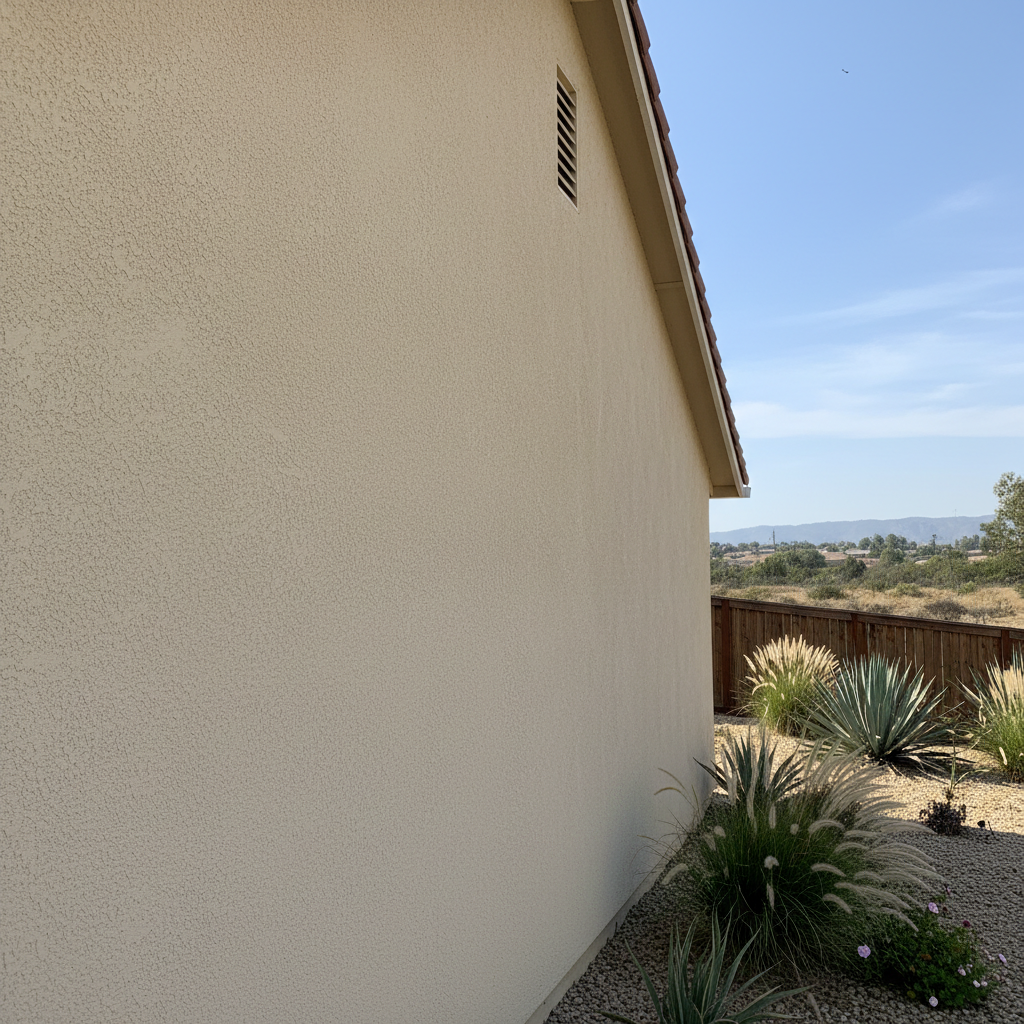
You've got stucco on your house, and you want it to last. That's smart. Done right, stucco is an incredibly durable and low-maintenance exterior, especially here in El Cajon. But 'low-maintenance' doesn't mean 'no maintenance.' A little bit of attention goes a long way in extending its life and keeping your home looking sharp.
Extending Your Stucco's Lifespan
The biggest thing you can do to make your stucco last is pretty simple: keep it clean and keep it dry. Our dry, hot El Cajon climate is generally good for stucco, but we still get those occasional heavy rains, especially in winter. Water is stucco's number one enemy, so managing it is key.
First, check your gutters and downspouts regularly. Make sure they're clear of leaves and debris, especially if you've got a lot of eucalyptus or palm trees around. You want water directed away from your foundation, not pooling against your walls. Also, take a look at your landscaping. Are sprinklers hitting the stucco directly? Adjust them. Plants and shrubs should be trimmed back so they're not constantly touching the walls, which can trap moisture and encourage mold or mildew growth.
Another thing I often see is folks planting vines directly on their stucco. Don't do it. Those tendrils can work their way into tiny cracks, and as they grow, they'll widen those cracks and pull away the stucco. It's a real headache to fix down the line.
Regular Maintenance: What to Do
For day-to-day care, stucco is pretty forgiving. Here’s what I recommend:
- Wash it down: Every year or two, give your house a good rinse. A garden hose with a spray nozzle is usually enough to remove dust, dirt, and cobwebs. For tougher spots, you can use a soft brush and a mild detergent solution (like dish soap and water). Just rinse thoroughly afterward.
- Inspect for cracks: Walk around your house a couple of times a year. Look closely at the stucco, especially around windows, doors, and where different building materials meet. Hairline cracks are pretty common and usually nothing to worry about. But anything wider than a credit card, or cracks that form a spiderweb pattern, need more attention.
- Check for efflorescence: Sometimes you'll see a white, powdery substance on the stucco. That's efflorescence, and it means moisture is moving through the stucco and depositing salts on the surface as it evaporates. It's not usually a structural issue, but it's a sign that you might have a moisture problem you need to address. You can usually brush it off with a stiff brush.
If you've got painted stucco, you'll want to keep an eye on the paint condition too. Peeling or blistering paint can trap moisture underneath, which is bad news for the stucco beneath it.
Warning Signs You Can't Ignore
While minor issues are part of homeownership, some things on your stucco are red flags. Don't put these off:
- Large or widening cracks: Like I said, hairline cracks are normal. But if a crack is getting bigger, or you can stick a dime in it, that's a problem. It could mean structural movement or serious water intrusion.
- Stains: Dark streaks, especially under windows or near the roofline, almost always mean water is getting in somewhere it shouldn't. Black or green patches usually indicate mold or mildew, which points to persistent moisture.
- Bulging or soft spots: If you press on the stucco and it feels soft, spongy, or you see it bulging outwards, you likely have water trapped behind it. This is serious, as it can lead to rot in the sheathing and framing underneath.
- Stucco detaching: If you can hear a hollow sound when you tap on the stucco, or worse, if pieces are actually falling off, you've got a significant issue that needs immediate attention.
Don't ignore these signs. What starts as a small problem can quickly become a very expensive repair if left unchecked. Especially with our older homes in areas like Fletcher Hills, where original stucco might be decades old, these issues can pop up.
When to Call a Professional
You can handle a lot of the basic cleaning and inspection yourself. But when you see those warning signs I just mentioned, or if you're just not sure what you're looking at, it's time to call in the pros. Here's when you definitely need an expert:
- Any time you have significant cracking, bulging, or soft spots.
- If you suspect water intrusion but can't find the source.
- When you need to match existing stucco texture or color for a repair. It's an art form, honestly.
- If you're considering a major repair or a complete re-stucco job.
Trying to patch serious stucco damage yourself often leads to an unsightly repair that doesn't hold up, and it might even hide the real underlying problem. As El Cajon Stucco & Plastering, we've seen it all, and we know how to diagnose and fix these issues properly, ensuring the repair blends seamlessly and protects your home for years to come. Getting it done right the first time saves you money and headaches down the road.
```json```