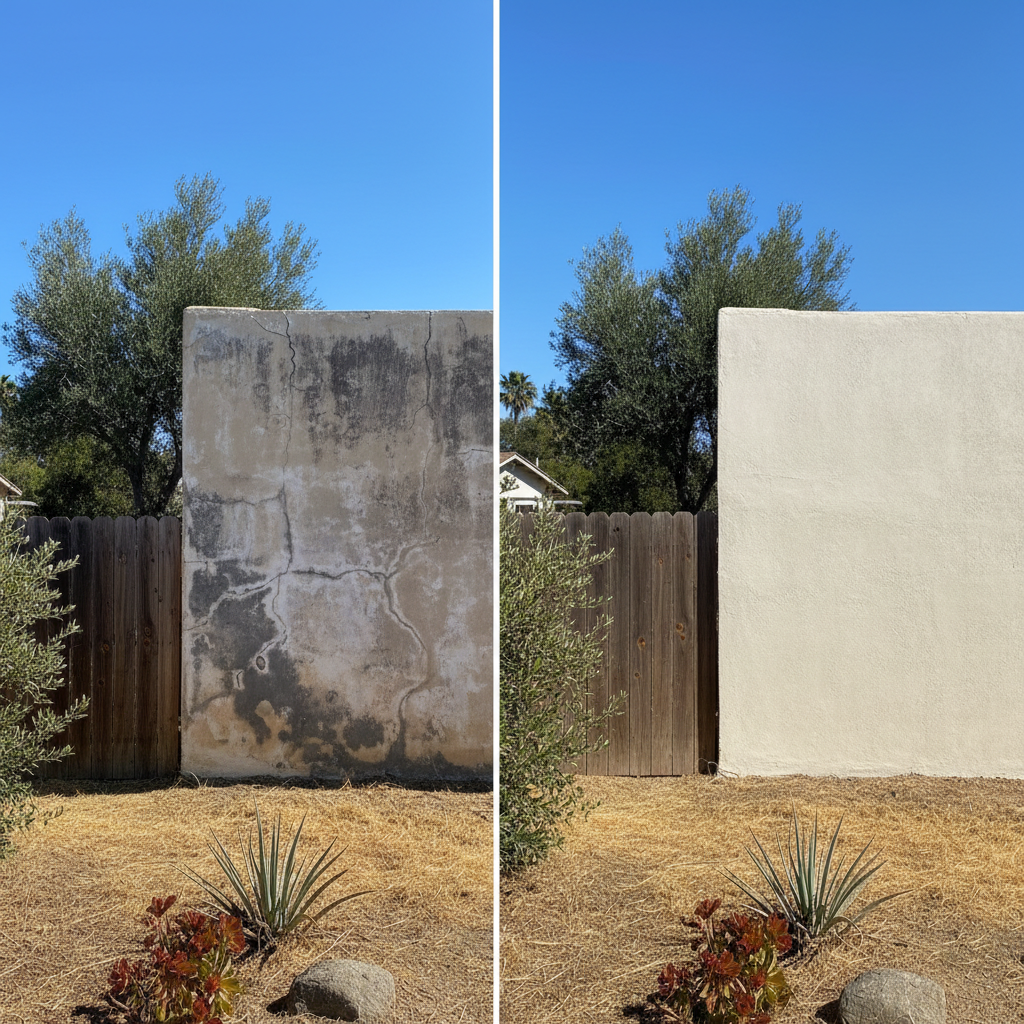
Should you strip your failing exterior down to the studs or just apply a new layer on top? It is a heavy question homeowners face when dealing with aging walls. El Cajon Stucco & Plastering looks at this choice every day across local neighborhoods like Fletcher Hills, where intense summer heat and sudden temperature swings take a real toll on buildings.
We will talk straight about the two primary paths: a complete tear-off and replacement versus applying a surface veneer or acrylic finish coat over the existing base. Both have their place, but picking the wrong one for your house can cost you dearly down the road.
The Complete Tear-Off Approach
Stripping the old stucco down to the wood or steel sheathing is messy, loud, and labor-intensive. Homeowners are paying for demolition, disposal, a brand-new weather-resistive barrier, metal lath, and a fresh three-coat system.
- Upfront cost is significantly higher due to heavy labor and disposal fees.
- Total renewal of your moisture barrier and framing inspection.
- Unmatched longevity when installed correctly on sound framing.
If your walls are showing deep, spiderweb cracking, soft spots, or signs of water intrusion behind the skin, you cannot shortcut this process. Putting makeup on a crumbling wall only traps moisture where it can rot your wood framing.
The Surface Veneer Alternative
If your current stucco base is structurally solid, flat, and well-bonded to the lath—with only surface-level fading or minor hairline cracks—a thinner veneer coat or heavy re-dash can make the house look brand new for a fraction of the price.
- Faster turnaround with minimal disruption to your daily routine.
- Lower initial material and labor expenses.
- Relies entirely on the health of the old layers underneath.
The trap here is ignoring hidden damage. If moisture has already compromised the lath or paper behind a seemingly decent surface, a veneer will only mask the rot until it fails catastrophically.
Making the Right Call in Our Climate
El Cajon weather swings can be brutal. El Cajon Stucco & Plastering sees triple-digit dry heat that bakes the exterior, followed by chilly nights and the occasional heavy winter downpour. That thermal cycling makes material compatibility important.
If you plan on staying in your home for the next 15 to 20 years or more and want solid protection, doing a full replacement when failure is widespread is always the better long-term investment. If you are prepping a solid home for the market or just dealing with cosmetic aging, a quality veneer saves cash upfront. Take a close look at your walls, check for hollow spots, and choose the path that protects your structure first and your wallet second.